DAIS Supply
Product knowledge & BOMs
ChainMap
Map products and components, explore AI suggestions and keep reviewed revisions connected to their source evidence.
Explore ChainMapFind practical tools to reduce repeated work, bring information into view and help your team do more with the resources it already has.
Connect product records, orders, shipments and receiving with ChainMap, OrderFlow, MoveFlow and StockFlow. Onboarding is by invitation.
Map products and components, explore AI suggestions and keep reviewed revisions connected to their source evidence.
Explore ChainMapLink purchase orders to approved products. Review supplier confirmations, split schedules and the next action for every exception.
Explore OrderFlowConnect shipments to orders, record movement milestones and keep document checks and delivery exceptions visible.
Discuss MoveFlowRecord what arrived, distinguish accepted and held goods, and follow shortages or discrepancies back to the order and shipment.
Discuss StockFlowTrade classification, specialist publishing and operational performance. Each starts with a clear business purpose.
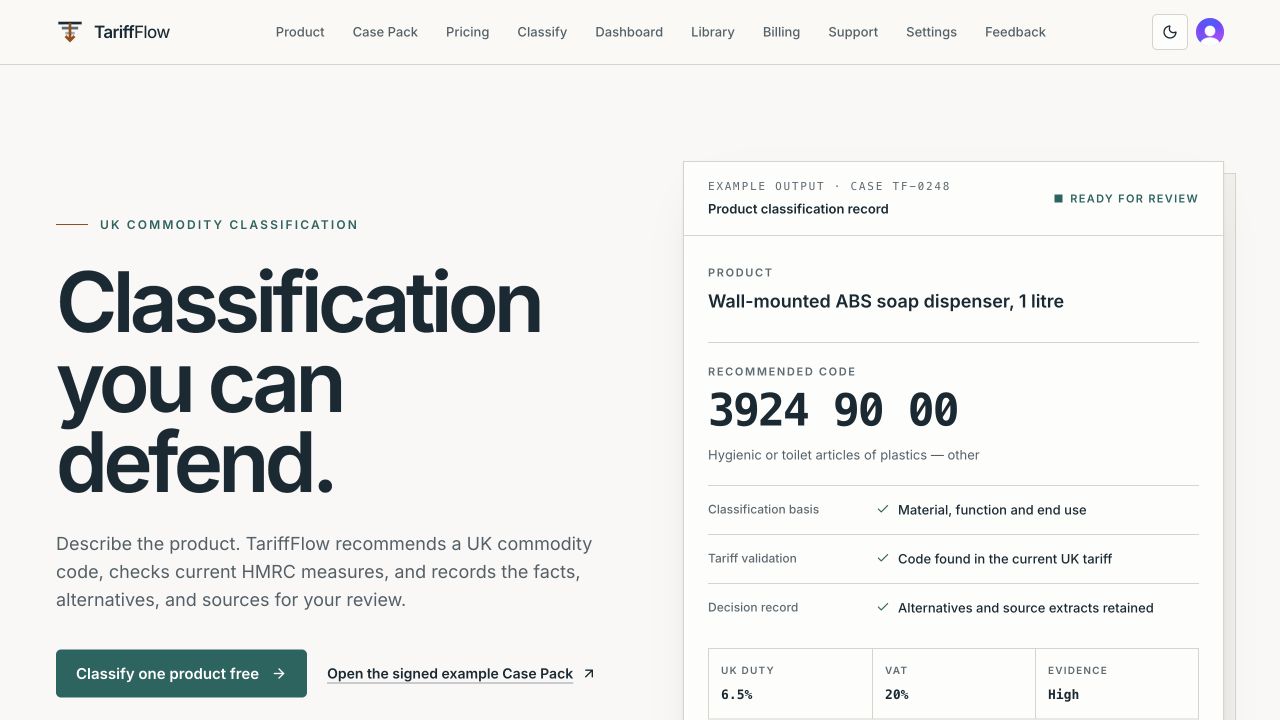 Product preview
AI-assisted commodity classification, with the evidence behind every recommendation.
Explore solution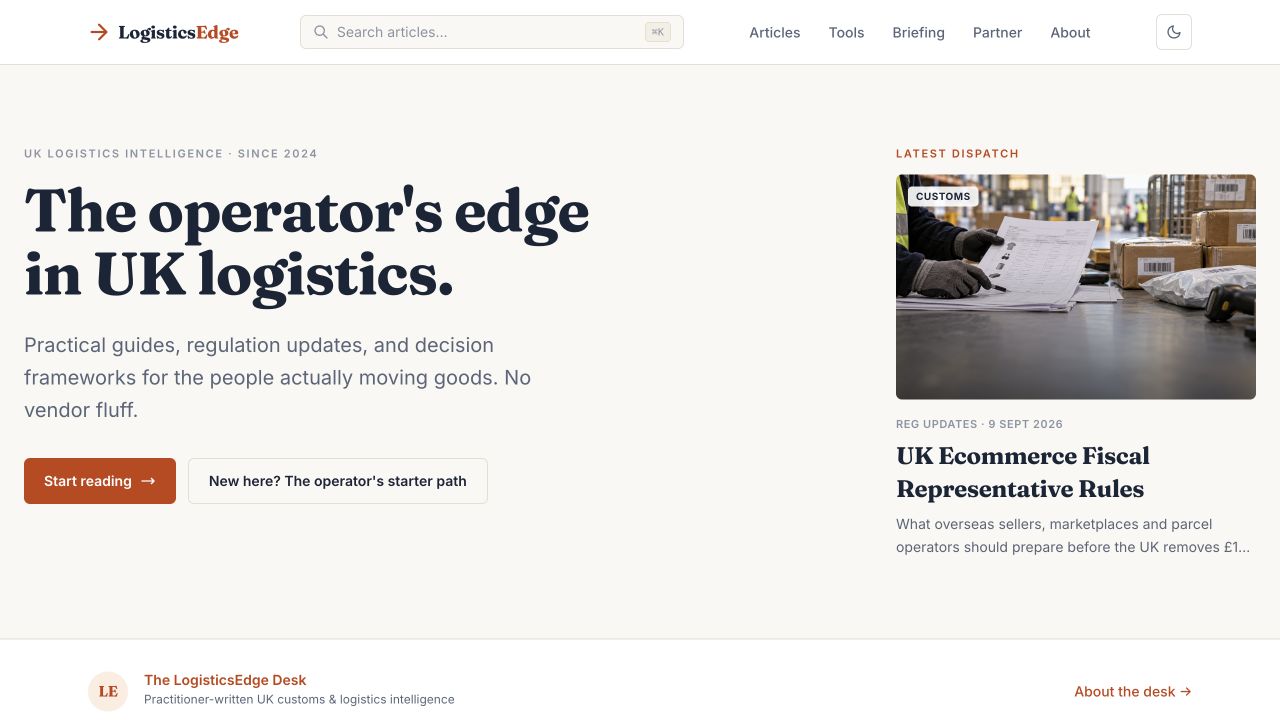 Product preview
An AI-run news site and blog for the people moving goods.
Explore solution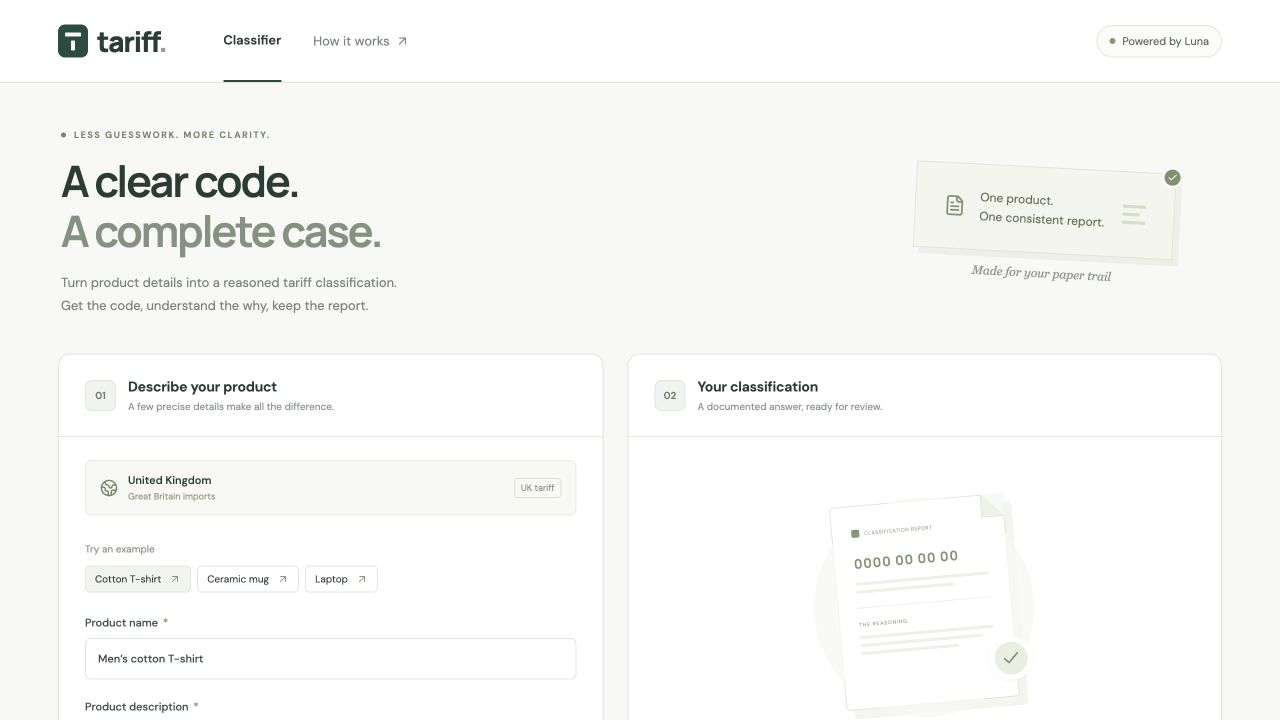 Product preview
A focused UK import classification tool with guided questions and a clear PDF report.
Explore solution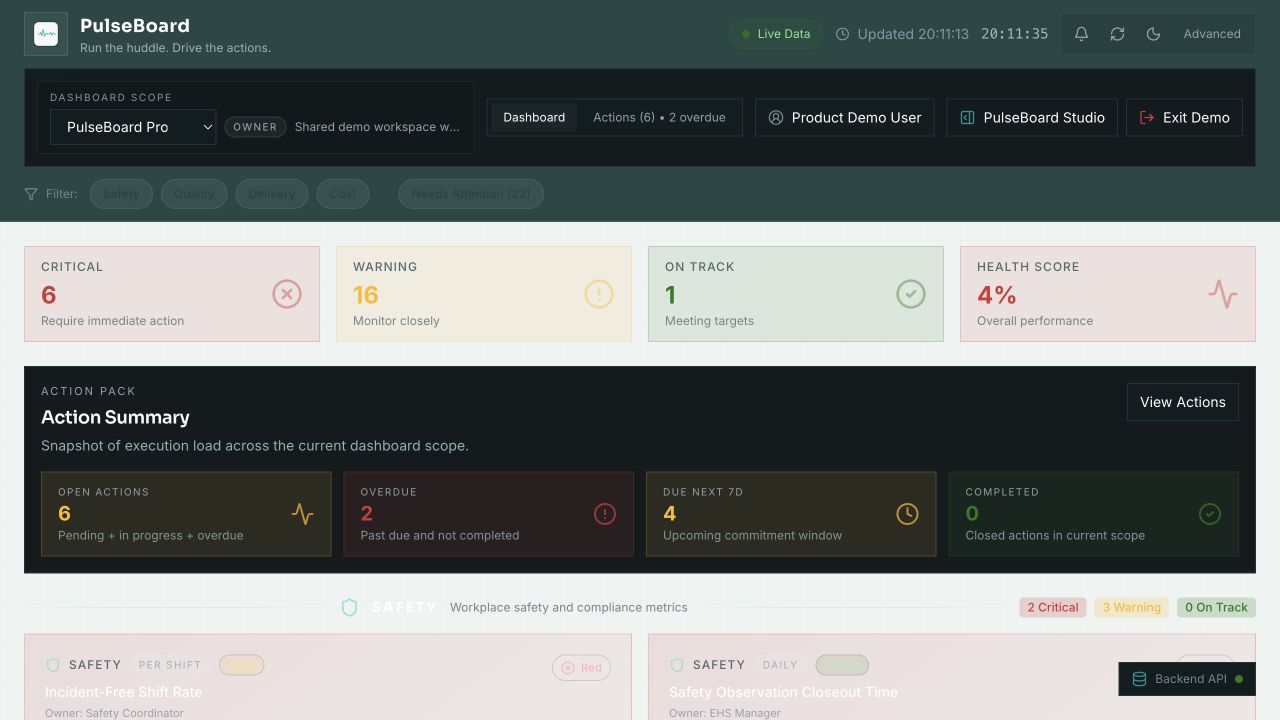 Public demo · sample data
Run daily huddles, track performance and turn issues into accountable actions.
Explore solutionChoose the closest fit. We’ll point you towards a useful place to explore.
Choose a focused GB classification report with Simple Tariff Tool, or explore TariffFlow for a broader product-record and evidence workflow.
Both tools support classification review. The best starting point depends on the task and the records you need to keep.
| What you need | Simple Tariff Tool | TariffFlow |
|---|---|---|
| Starting point | A defined Great Britain import classification task | Recurring UK classification and product-record work |
| How you work | Describe the goods and answer relevant product questions | Work from descriptions, manufacturer documents or images |
| What you review | A proposed 10-digit code, reasoning, alternatives and sources | Recommendations, alternatives, evidence and current HMRC measures |
| What you keep | An A4 classification report | Saved product records and signed Case Pack PDFs |
| Where to go next | Explore Simple Tariff Tool | Explore TariffFlow |
Both require human review. Simple Tariff Tool does not cover Northern Ireland or calculate duty, VAT or origin-specific measures. Neither provides a binding customs ruling.
A custom project starts with one useful job. We scope the inputs, the output and the decisions people need to stay involved in.
Explore extracting fields, flagging missing details and preparing information for review.
Explore the use caseScope an assistant around approved documents, real team questions and clear source references.
Explore the use caseExplore summarising requests, suggesting an owner and preparing a draft response for approval.
Explore the use caseThese are examples of custom projects we can scope, with the features and connections agreed before a build.
Yes. Each product page links to its live website. If you need help deciding whether it fits, use the enquiry form to tell us about your workflow.
We start by checking whether an existing product or a simpler process change can do the job. A custom build is an option when your requirements justify it.
Integration requirements can be assessed and scoped. We need to understand the systems, access available and the data involved before confirming what can be connected.
Consultancy, setup and custom work are scoped and quoted before they begin. Product-specific plans and availability are shown on the individual product websites.
Bring us an everyday problem. Let’s find a practical way to make work flow.